05The Options Journal

Fashion & style inspiration

Practical, considered writing on contemporary women's western fashion — how to build a wardrobe, choose silhouettes, combine colours and develop a style that is unmistakably yours.

Understanding contemporary western fashion

What “western wear” really means today — and why it suits modern life in Mumbai so well.
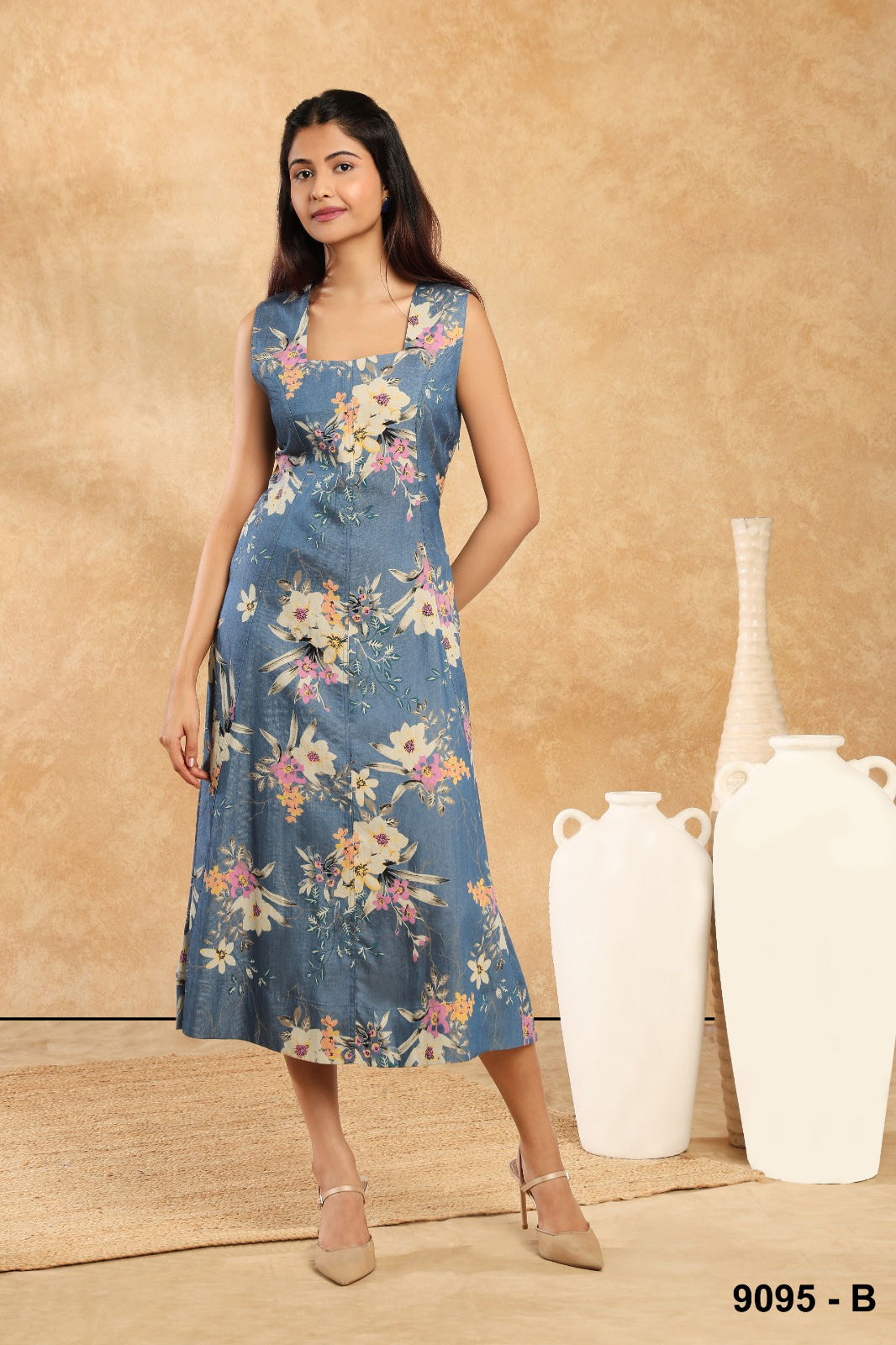
Woman in a sleeveless blue midi dress with a soft white floral print

Contemporary western fashion is less a fixed style than a toolkit: shirts, trousers, dresses, skirts and sets that can be combined in countless ways. What makes it “contemporary” is the cut and the attitude — softer tailoring, relaxed proportions, fluid fabrics and prints that feel artful rather than fussy.

For women in Thane and Mumbai, the appeal is practical as much as aesthetic. Western pieces are quick to put on, easy to layer for air-conditioning, and simple to adapt from work to evening. A sleeveless floral midi, for instance, is cool on a hot afternoon; add a light shirt or cardigan and it is ready for an office.

It also blends naturally with personal and cultural style. Many women mix western silhouettes with embroidered details, handcrafted prints or traditional jewellery — and that blend is very much part of what modern women's fashion looks like here.
Building a versatile wardrobe

Fewer pieces, more outfits: how to plan a wardrobe that works across your week.

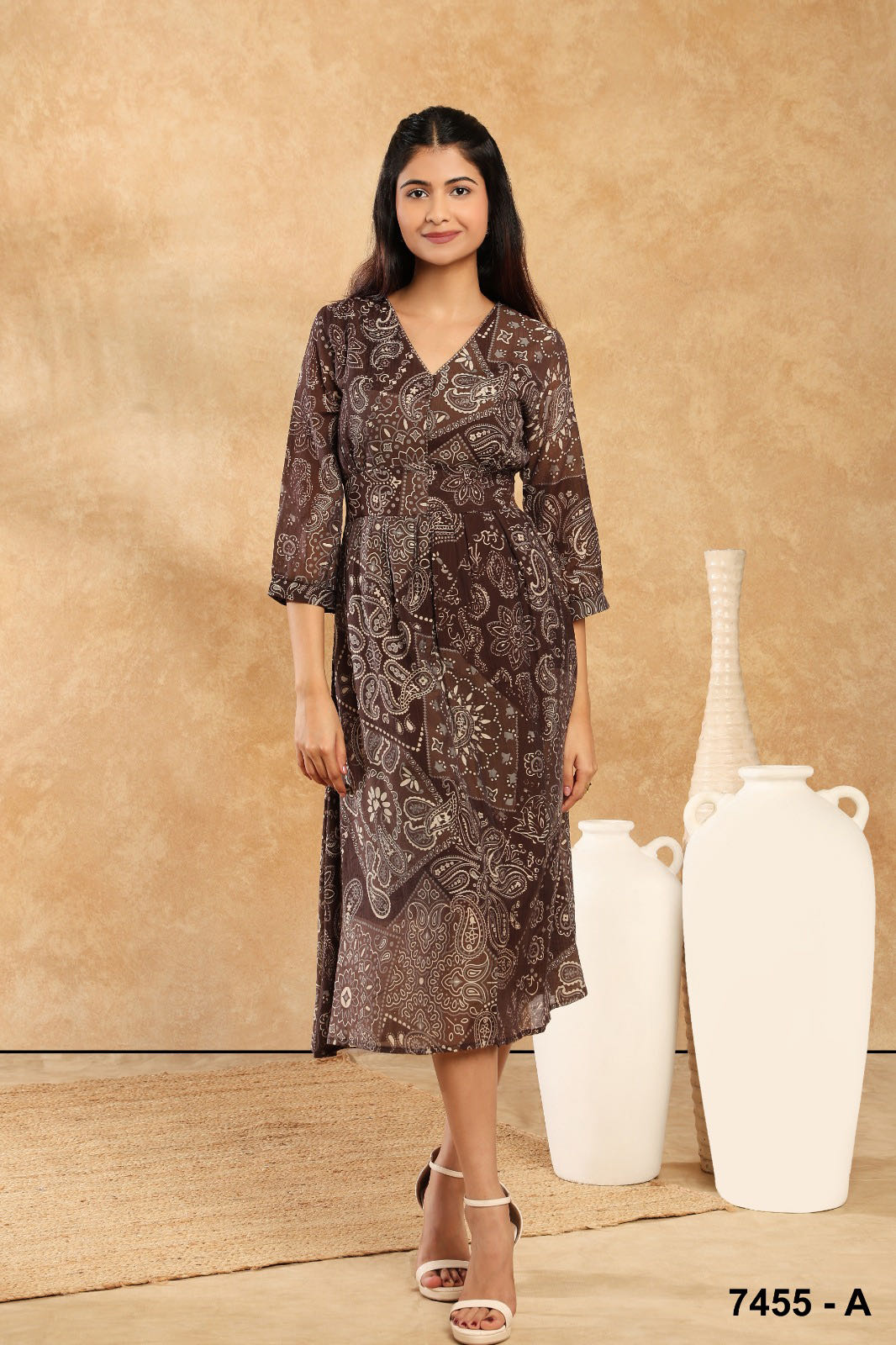
Woman in a brown paisley print wrap midi dress with long sleeves

A versatile wardrobe begins with a base of pieces that combine easily. Think of trousers in neutral, earthy shades — black, chocolate, camel, ivory — and a handful of tops and dresses that each work with several of them.

Prints become far easier to wear when your base is calm. A paisley wrap dress like this one can be worn alone, layered with a solid jacket, or belted to change the shape. Each option feels new without requiring a new purchase.

When adding something to your wardrobe, a useful test is to imagine three outfits you could make with it immediately, using what you already own. If you can, the piece will earn its place.

Everyday fashion inspiration

Small, repeatable ideas that make getting dressed in the morning easier and more fun.

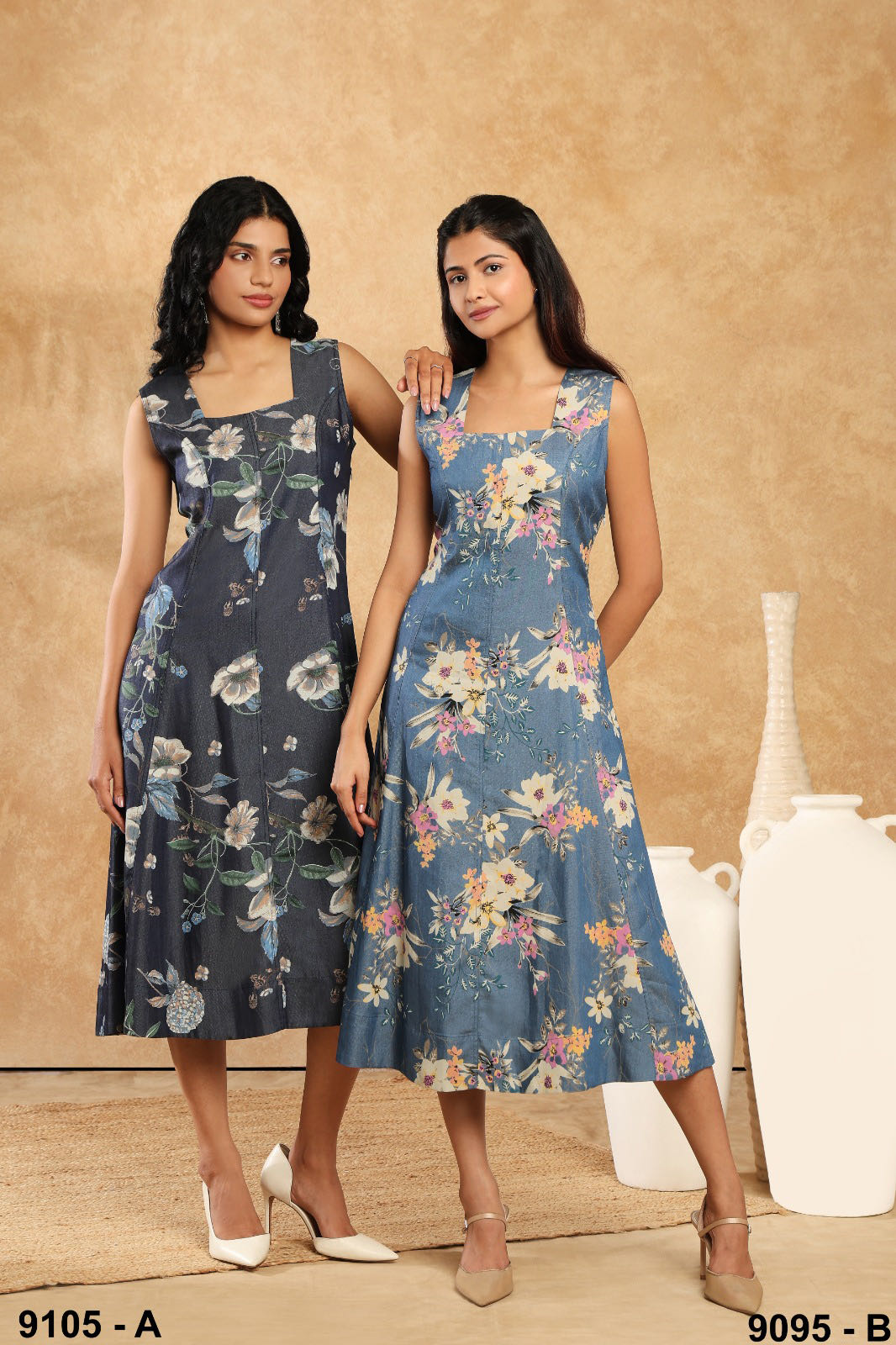
Two women in coordinating blue floral print dresses

Everyday style is mostly about routine — finding a few formulas that you can repeat with variation. A printed midi dress with flat sandals, a shirt with wide-leg trousers, a co-ord set with trainers: once you have a handful of these, mornings become simpler.

Coordinating with a friend or sister is an easy way to make everyday dressing feel playful. Two dresses in the same colour family but different prints, as here, look connected without being identical.

Keep a small rotation of accessories by the door — sunglasses, a crossbody bag, one or two pairs of earrings. Changing just one of these is often enough to make a familiar outfit feel fresh.

Choosing silhouettes

Understanding shape is the single most useful styling skill. Here is a simple way to think about it.

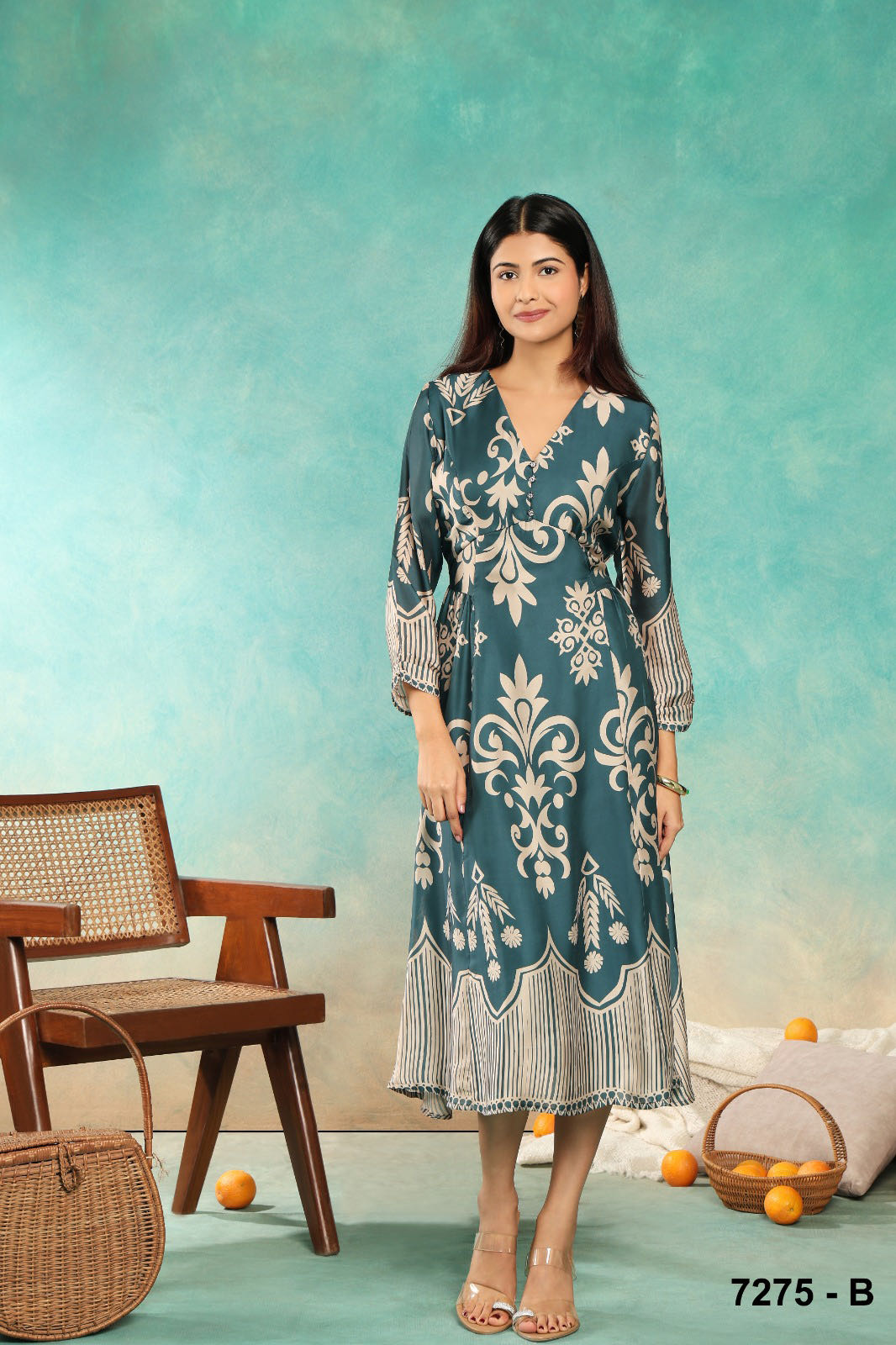
Woman in a teal ikat-style printed midi dress with a striped hem

Every outfit creates an overall silhouette — the outline you would see if you squinted. Most flattering looks balance volume: if the top is loose, the bottom is more defined, and vice versa. A fitted bodice with a fuller skirt is the classic example.

Waist definition is a useful lever. Wrap dresses, belts and peplums all draw attention to the waist, which creates shape on straighter figures and balance on curvier ones.

Length matters too. Midi dresses, like this ikat-style print with a striped hem, are among the most versatile lengths for daily life — elegant, practical for commuting, and suited to both flats and heels.

Understanding colour combinations

A practical way to combine colours with confidence, without relying on rules you have to memorise.

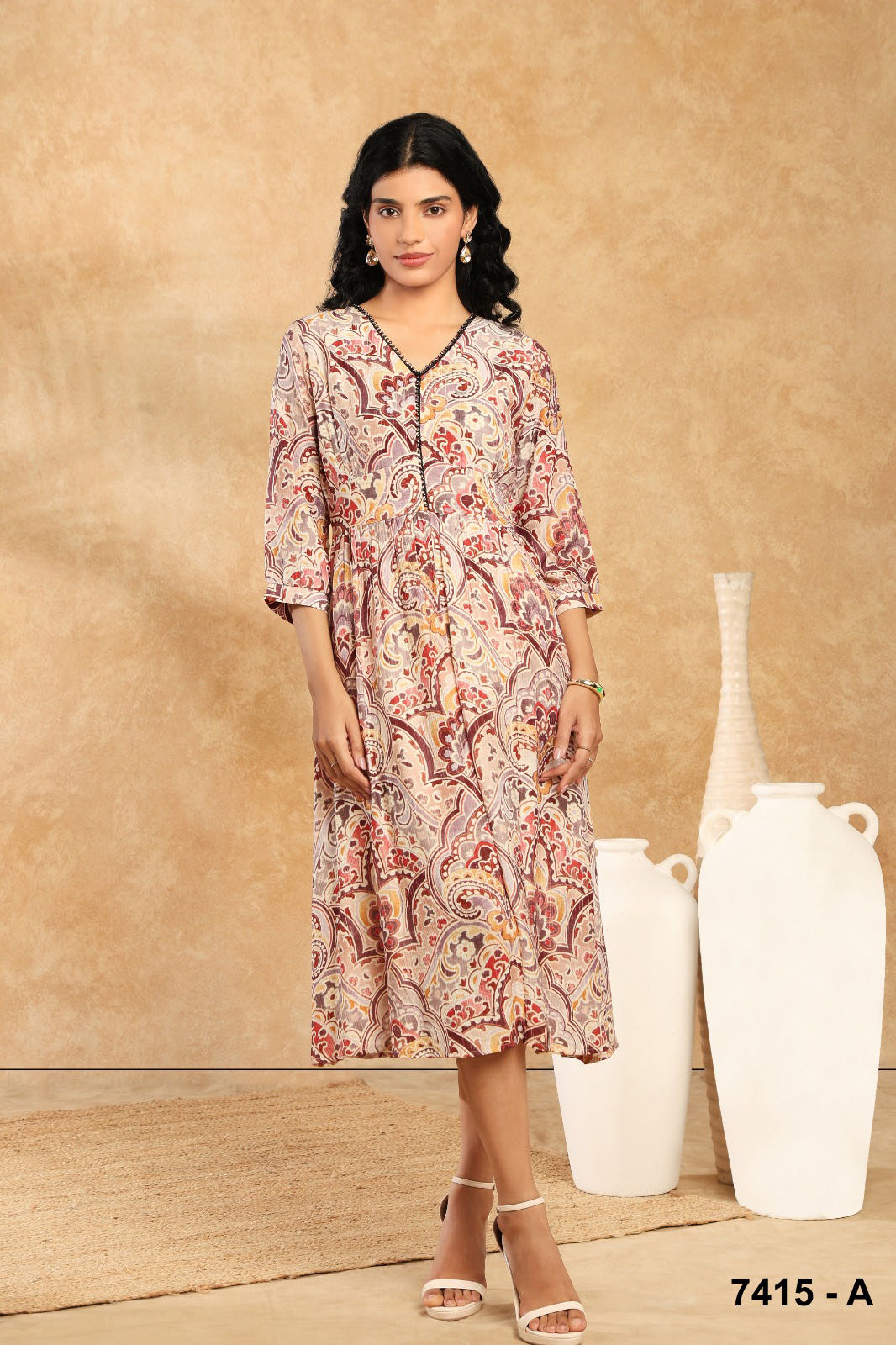
Woman in a blush paisley print midi dress with a contrast neckline

The simplest colour strategy is to pick one colour from a print and repeat it elsewhere in the outfit. A blush paisley dress with a dark contrast neckline, for example, pairs naturally with shoes or a bag in the same dark tone.

Tonal dressing — different shades of one colour — always looks considered. Think wine with plum, or chocolate with camel. It is also an easy way to wear stronger colours, because the shades soften each other.

Complementary pairings, such as teal with rust or orange, create energy. Use them in moderation: one as the main colour, the other as an accent.

Styling different clothing categories

How to approach dresses, tops and co-ord sets — each has its own logic.

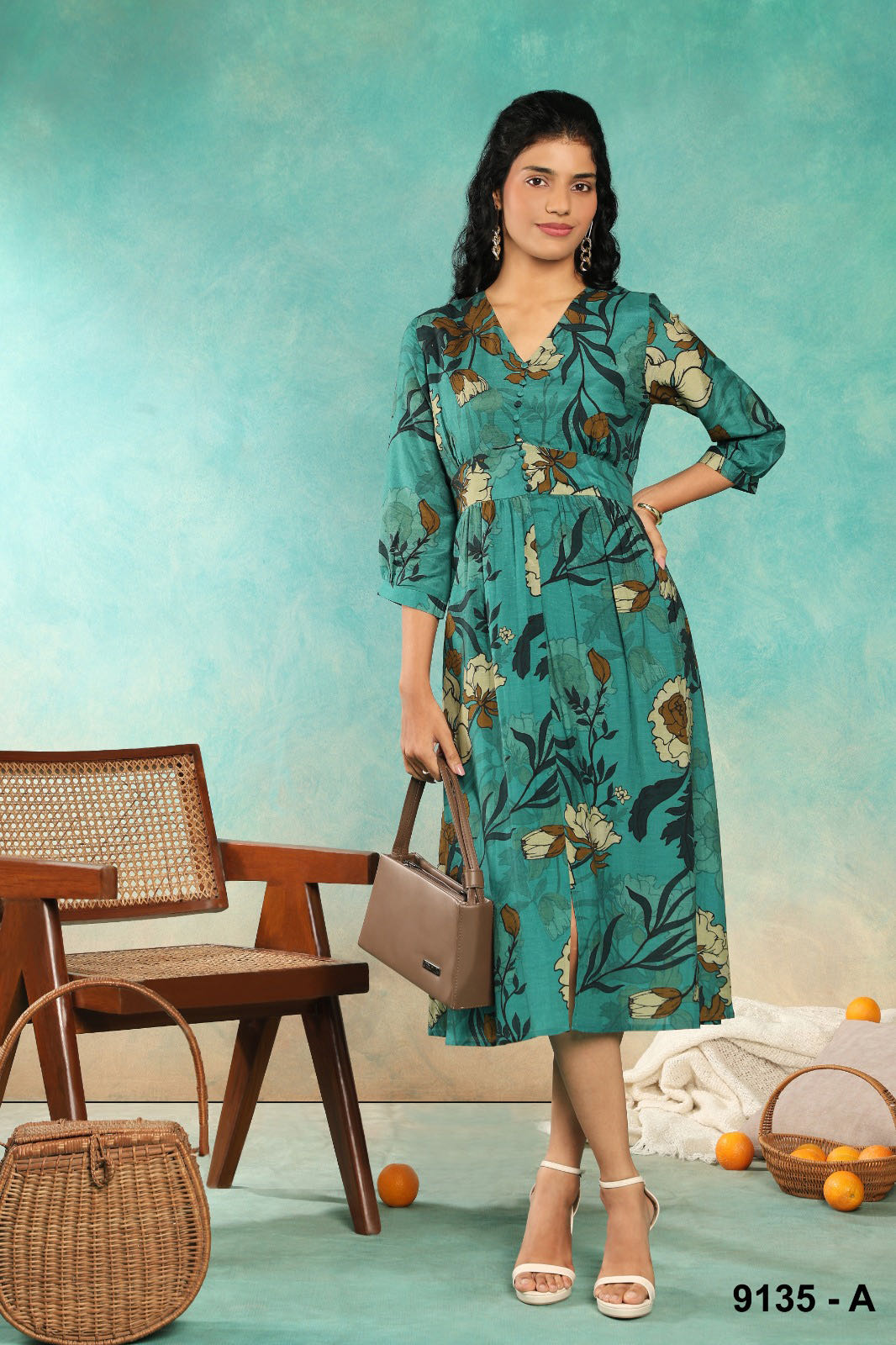
Woman in a teal botanical print midi dress carrying a structured handbag

Dresses are complete looks, so styling is about context: shoes, a bag, and a layer if needed. A structured handbag, as here, instantly makes a printed midi dress feel more polished.

Tops and shirts are the expressive half of an outfit. Choose the trouser or skirt to support them — usually a solid in a colour taken from the top.

Co-ord sets can be worn together for a streamlined, elongated look, or separately to multiply your outfits. Treat each half as its own piece when you plan your wardrobe.

Balancing comfort and elegance

Elegance does not have to mean discomfort — especially in a warm, humid city.

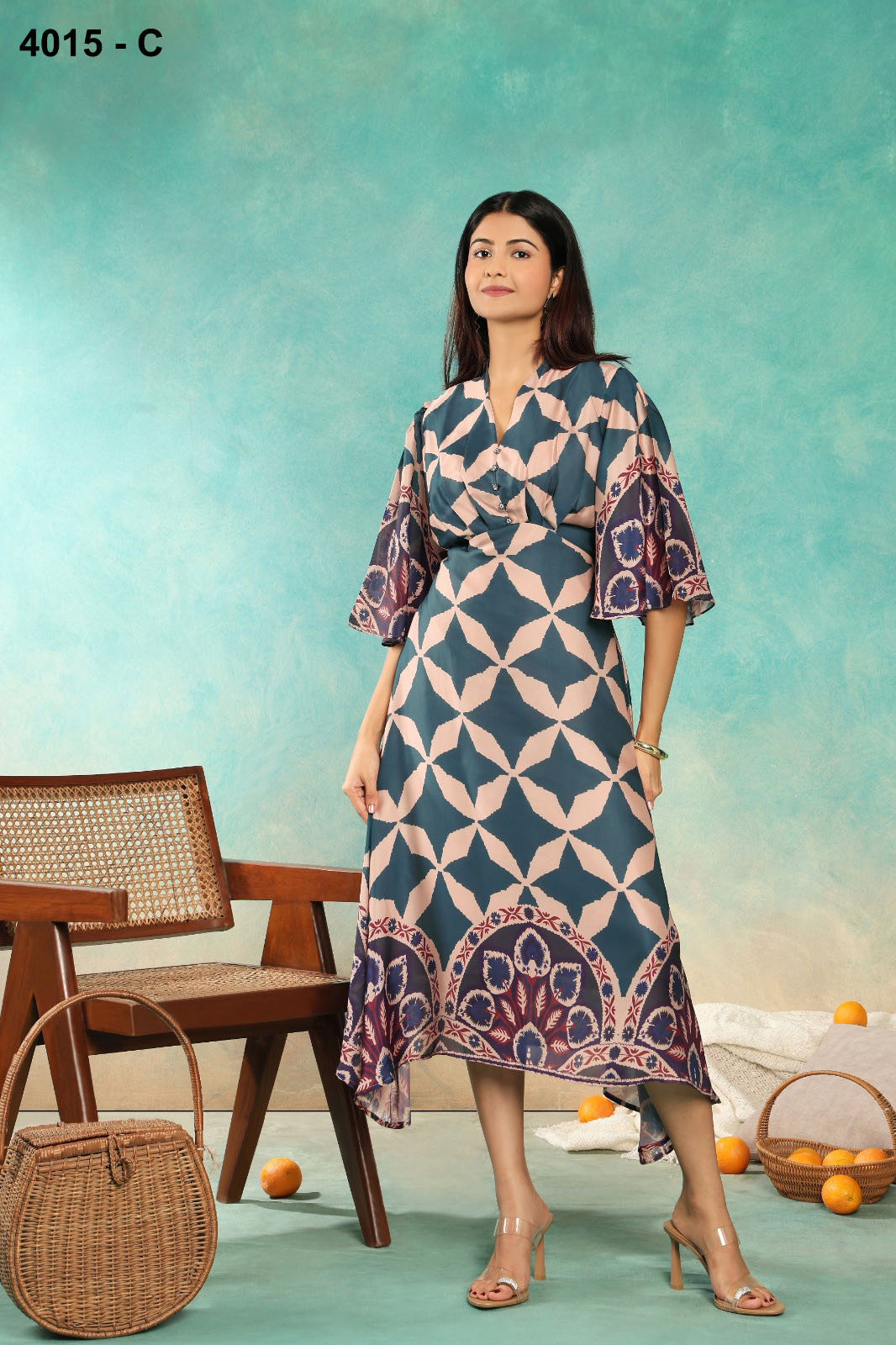
Woman in a navy and ivory geometric print dress with flutter sleeves

Comfort begins with fabric. Breathable weaves and fluid drapes keep you cool, and they also tend to move beautifully, which reads as elegant. Flutter or wide sleeves, like these, allow air to circulate while adding softness.

Fit is the second half. Clothes that are slightly relaxed through the body often look more refined than tight ones, because they skim rather than cling.

Finally, choose shoes you can actually walk in. A low block heel or a pointed flat keeps the line elegant without slowing you down.

Developing your individual fashion identity

Personal style is built gradually, through noticing what you love and why.

Woman in a mixed-print tunic with beige trousers

Your fashion identity is visible in the pieces you reach for again and again. Spend a week noting what you wear and how it makes you feel — patterns emerge quickly. Perhaps you love mixed prints, like this tunic, or always choose earthy colours.

Once you know your preferences, use them as a filter. It becomes easier to say no to pieces that do not fit your style, and easier to recognise the ones that do.

Leave room for experiment, too. Trying one new silhouette or colour each season is how a personal style keeps evolving rather than standing still.

NoteAbout this journal

Advice, not rules

The guidance here is general styling advice, written to help you think about clothes in a practical way. It is not based on market research or trend forecasting, and it is no substitute for trying things on.

Explore the collections online, then visit Options Mall to see fabrics, colours and fit for yourself.